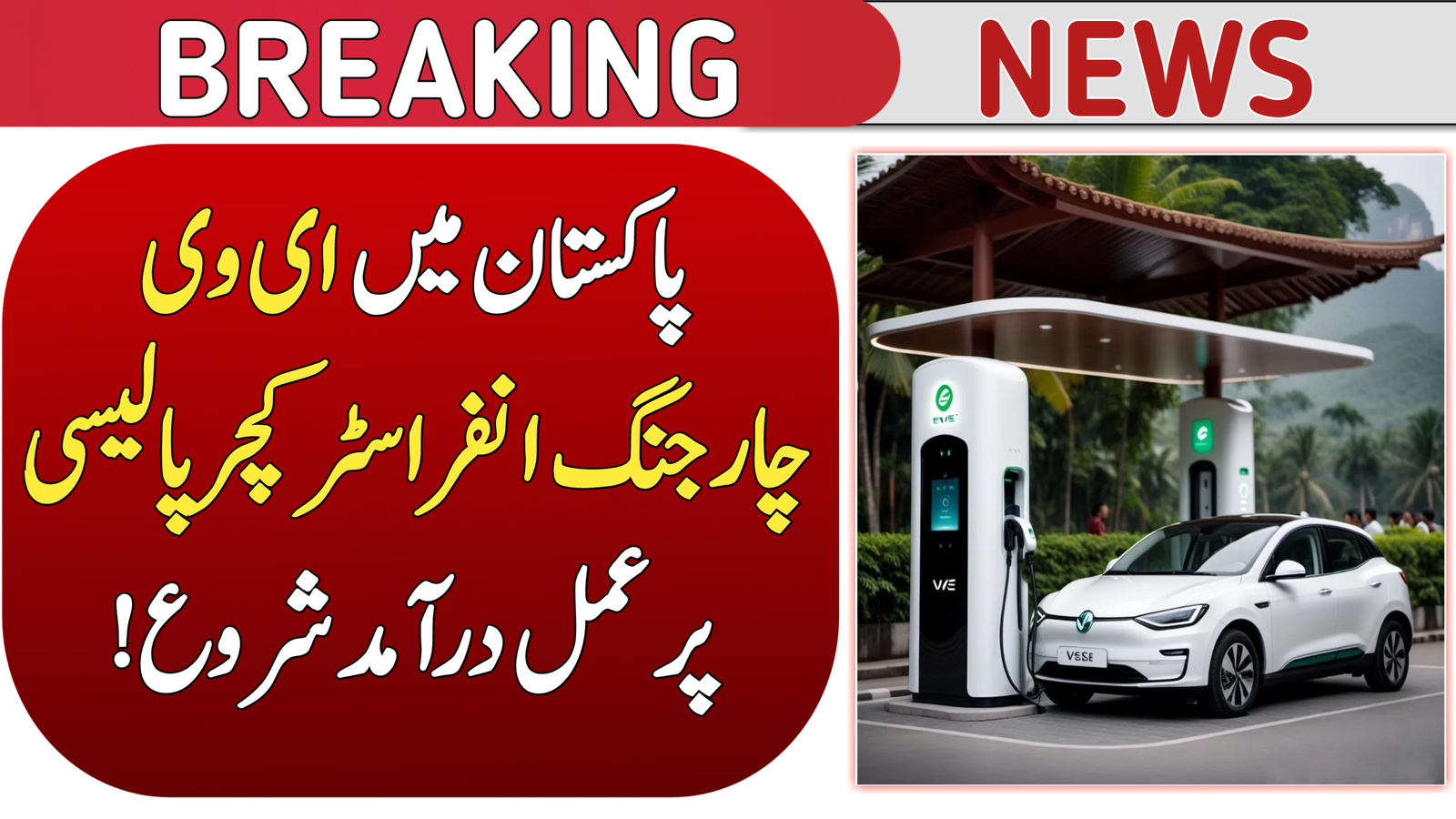
The federal government has officially started implementing the EV Charging Infrastructure Policy, and according to officials, the groundwork is already in motion across the country. This move is being seen as a major push toward reducing fuel dependency, improving air quality, and preparing Pakistan for an electric future.
Read More: CM Punjab Ration Card Program
Table of Contents
Current Status of EV Charging Policy Implementation (2025)
| Development Area | Latest Update |
| Licenced Companies | 72 approved operators |
| Responsible Ministries | Industries & Production, Power Division |
| Policy Goal | Build nationwide charging network |
| Current Groundwork | Ongoing in major cities |
Govt Moves Ahead With Nationwide EV Charging Setup
For years, Pakistanis have heard about electric vehicles but struggled with one basic question: Where will we charge these cars? Now, the government has started putting a proper system in place. The Ministry of Industries and Production, along with the Power Division, has been given full authority to design rules, set standards, and make sure EV charging stations are developed in a smooth and transparent way.
Officials shared that 72 companies have already received licences to install and operate EV chargers in different cities. This is the first time such a large number of operators have been approved under one policy, and it shows that the private sector is also ready to support the change.

Plan for 3,000 Charging Stations by 2030
One of the most important goals under this policy is the establishment of 3,000 EV charging stations across Pakistan by 2030. This network will cover national highways, motorways, big cities, and even developing suburban areas. For the current fiscal year alone, the government plans to set up 240 new charging stations, which will be completed through a mix of government and private-sector investment.
This is good news for people who have been thinking about buying an electric car but were worried about long-distance travel. With more stations and clear regulations, Pakistan’s auto market may finally start shifting toward EVs in a serious way.
Read More: Punjab Extends Admission Deadline for Matric Exams
Who Will Monitor the New EV Network?
To avoid misuse and ensure quality, the entire EV charging system will be monitored closely by:
- Ministry of Industries and Production
- Power Division
- NEPRA
These institutions have been given special powers under the policy to oversee installation, pricing, safety measures, and compliance. The idea is to prevent overcharging, ensure reliable power supply at stations, and maintain a standardised system nationwide.
Why This EV Charging Infrastructure Policy Matters for Pakistan
Pakistan’s cities are currently facing increasing smog levels, and fuel prices continue to rise every few months. In such a situation, investing in electric vehicles is not only beneficial for the environment but also easier on the pocket in the long run. With the government actively supporting EV adoption, car manufacturers and investors may also accelerate their plans to introduce more affordable electric cars for Pakistani buyers.
Moreover, this initiative could generate new jobs—electricians, technicians, station managers, and maintenance workers will all be needed as the network expands. It also signals that Pakistan wants to join the global EV transition instead of staying dependent on oil.
Read More: Akhuwat Microfinance Loan Scheme
Expected Benefits of EV Charging Policy
| Category | Expected Impact |
| Environment | Lower smog & cleaner air |
| Economy | Reduced fuel import bill |
| Job Market | New technical & management jobs |
| Consumers | Cheaper long-term travel cost |
| Auto Industry | Boost in EV imports & local assembly |
Public Reaction and Industry Expectations
Early reactions from the auto industry are positive. Businesses believe that once the charging stations become common, EV imports and local manufacturing will pick up pace. Some companies have already begun planning to bring budget-friendly electric bikes and compact EVs for middle-class users. Consumers, on the other hand, are hopeful but cautious. Many Pakistanis still need clarity on charging prices, battery life, and the overall affordability of EVs. However, this new policy rollout gives them a reason to believe that change is finally happening.
Read More: Petrol Price in Pakistan
Final Thoughts
The implementation of the EV Charging Infrastructure Policy is a refreshing and much-needed step. Pakistan has lagged behind in adopting modern transport technologies, but this policy could be the start of a cleaner, smarter future. If the government maintains transparency, ensures fair pricing, and encourages private investment, Pakistan could see a significant shift toward electric mobility over the next five years.